

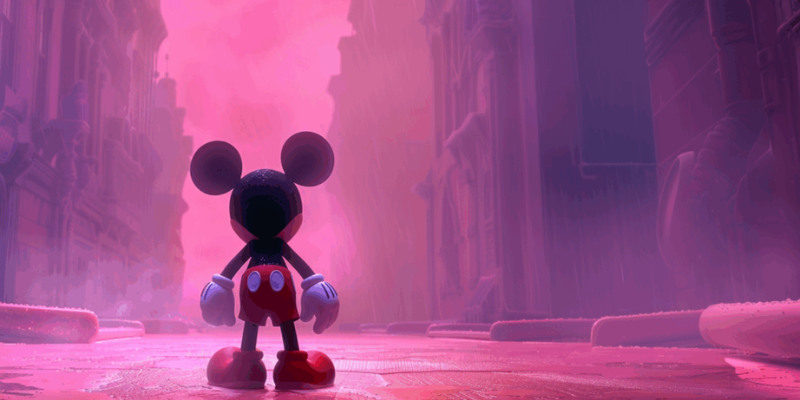
One of the most intriguing developments in contemporary animation is hybrid animation, which combines 2D illustration with 3D depth. Artists worldwide are fusing the realism of 3D worlds with the appeal of hand-drawn art in everything from commercial commercials and independent ventures to popular movies and anime series. This method allows artists to create environments, dynamic camera motions, lighting effects, and expressive 2D characters that would be challenging to accomplish with 2D alone. The outcome? animations that are visually appealing, engrossing, and seem natural.
Hybrid animation stands out as a method that is both adaptable and accessible as more artists seek to push creative boundaries. Learning to create these animations can improve your style and storytelling, regardless of your level of experience. The key tools, methods, and processes required to produce beautiful 2D/3D hybrid animations are broken down in this article. FITA Academy empowers video editors to align cutting-edge editing techniques with today’s fast-paced, creative, and digital-first content production environments.
Fundamentals of Hybrid Animation and Why It Works
The emotional expressiveness of 2D and the spatial realism of 3D are two complimentary strengths that hybrid animation combines to great effect. Artists can communicate personality in 2D by using hand-drawn appeal, distorting shapes, and exaggerating gestures. In the meantime, the world surrounding the protagonists is enhanced by 3D’s structured lighting, fluid camera movement, and physical depth. Combining them results in a style that is both cinematic and artisanal. Knowing what each medium excels at is the first step towards successful hybrid animation.
For instance, you might create environments, objects, or vehicles in 3D while designing characters and effects in 2D. Additionally, some projects employ 2D touches for stylization after using 3D for intricate motions like rotations or crowd scenes. After you grasp these principles, you may deliberately decide which aspects of the animation should be modeled and which should be drawn, resulting in a unified style that complements rather than detracts from the narrative.
Choosing the Right Software, Tools, and System Requirements
Your workflow and creative flexibility will be directly impacted by the tools you select. Toon Boom Harmony, Adobe Animate, TVPaint, OpenToonz, and Krita are popular 2D animation applications for frame-by-frame animation. Industry favorites for 3D are Blender, Maya, and Cinema 4D, with Blender being a potent free choice. For instance, hybrid creators frequently combine these programs, using Harmony for drawing and Blender for modeling and animating 3D objects. For rendering and compositing, your system should have a powerful CPU, a cutting-edge GPU, and sufficient RAM.
Clean 2D lines require a pressure-sensitive drawing tablet. To pull everything together, it’s also useful to use a compositing program like Blender’s video editor or After Effects. Budget, learning curve, and program integration are all important considerations when choosing your software. A quicker pipeline, fewer rendering problems, and more time spent animating rather than troubleshooting are all guaranteed by smooth interoperability. Come and enroll in our Video Editing Course in Chennai to master professional editing tools and create stunning, studio-quality videos.
Integrating 2D and 3D Elements
Effective hybrid animation starts well in advance of the animation process. Create a detailed storyboard first, outlining the interactions between 2D and 3D objects. Consider this: Will props be 3D and characters be 2D? Will 2D textures be overlaid on top of 3D environments across the entire scene? Create your assets in accordance with the visual style once it has been established. Consider character movement and camera angles as you begin constructing your 3D sets.
To create time and spatial continuity, then animate block-outs or rough poses in three dimensions. Export reference frames or playblasts to your 2D program once the 3D animation is complete. These will serve as a guide when you design characters or effects right on top, making sure they blend in with the scene’s perspective and depth. Maintaining visual coherence and avoiding inconsistencies in shadows, scale, or timing are two benefits of including both media early in the planning process.
Optimizing Rendering, Layering, and Compositing for Visual Harmony
Hybrid animations really come to life during rendering and compositing. You can use a compositing application to combine your 3D parts with your 2D layers after they have been animated and rendered, typically in passes like ambient occlusion, diffuse, and shadows. To maintain high-quality detail, use transparent PNG sequences or EXR files. Depending on the desired interaction, arrange your 2D drawings either above or between 3D layers.
A 2D character might, for instance, stroll in front of a 3D background but behind a 3D building. To keep the two media from seeming disjointed, adjust the color grading so that they have the same color scheme and lighting tone. Rim lighting, motion blur, glows, and depth-of-field effects can all contribute to a more unified final animation. To identify irregularities like mismatched shadows or line thickness, test composites should always be completed early. Your hybrid animation will feel cohesive rather than piecemeal if you use proper compositing. Come and join our Animation course in Chennai to learn top-tier animation techniques and kick-start your creative career.
Exploring Essential Tools
To maintain the final product’s visual coherence, skilled hybrid animators employ a combination of technical and artistic techniques. For instance, a lot of people use Blender’s Grease Pencil function, which makes it simpler to combine hand-drawn artwork with models by enabling direct drawing in three dimensions. Others use Harmony’s node-based compositing to seamlessly incorporate 3D items into a 2D environment. Even with 3D objects, methods like camera mapping, toon shaders, and cel-shaded 3D models can help replicate a hand-drawn appearance.
Another popular method for providing 2D characters with consistent dimensions during intricate movements is rotoscoping 3D reference animation. To give 3D models a 2D appearance, experts also employ lighting and texturing techniques like adding lines, gradients, or hand-painted textures. Gaining an understanding of these technologies allows one to access more creative styles and sophisticated production pipelines utilized in both high-caliber individual projects and large animation studios. Enroll in our VFX Courses in Chennai and gain hands-on experience in creating cinematic visual effects for films, ads, and games.
Tips for Integrating Open-Source
A successful hybrid animation workflow depends on how well your tools operate together rather than on a single program. Paid programs like Harmony, After Effects, or Maya work well with open-source programs like Blender, Krita, and OpenToonz. Set up dependable export formats, such as PNG sequences or XML-based camera data, to ensure that your scenes transition correctly between programs and prevent bottlenecks. To maintain 2D items precisely aligned, for instance, create a 3D camera motion in Blender and then export it for usage in Harmony.
To avoid misunderstanding between programs, use uniform naming standards and shared color profiles. Select software that allows scripting or automation to cut down on repeated chores because hybrid workflows frequently need switching between various tools. You may balance price, features, and creative freedom by combining open-source and paid technologies. Creating a pipeline that seems organic and sustains creativity is crucial. Also, video editing helps in business.
Practical Advice for Improving Workflow
Although hybrid animation may seem complicated, the process is made easier with a planned workflow. To begin, arrange your project files into distinct folders for references, assets, renders, and final composites. Use version control tools like Git or cloud storage services when working in a team to stay on top of updates. Assign distinct tasks to artists working together to maintain consistency between 2D and 3D parts.
Before committing to the final animation, create a file-sharing system that enables rapid feedback loops, such as sharing playblasts or draft composites. During lengthy production cycles, batch rendering and proxy files can save time and lessen computer load. Remember to factor in revision time. To make the 2D and 3D components feel seamless, hybrid projects frequently need to be adjusted. You will have more time to concentrate on innovative choices rather than technical solutions if your workflow is more structured. Training Institute in Chennai for Video Editing to develop a strong understanding of editing fundamentals, master cutting-edge software tools, color grading, motion graphics, and gain the creative skills needed to produce professional-quality videos and compelling visual content.
The Future of Hybrid Animation Is Bright
2D/3D hybrid animation is now widely used in entertainment, advertising, education, and independent content production. It is no longer a specialized technology. Its adaptability allows producers to create a style that feels both old and modern by fusing hand-drawn charm with cinematic reality. Anyone can learn to make beautiful hybrid animations with the correct tools, a well-thought-out plan, and a defined approach.
The barrier to entry is getting down as workflows become more accessible and software advances. This method offers limitless creative possibilities, whether you’re playing with basic 2D overlays or creating whole hybrid worlds. The secret is to maintain your curiosity, practice frequently, and follow your creative intuition.