

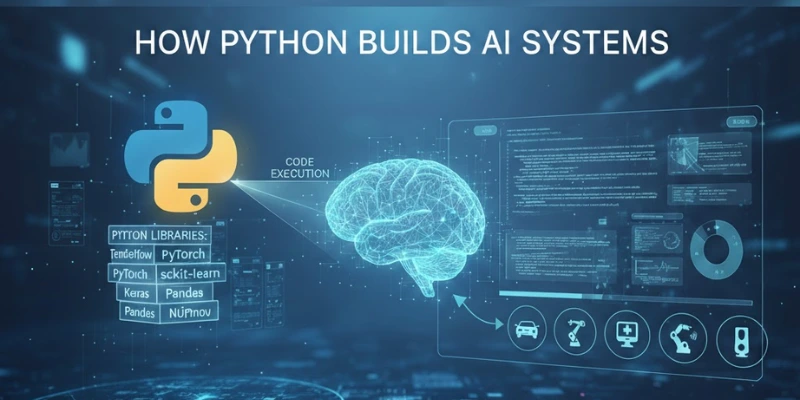
When people first hear about AI systems, they imagine robots, complex algorithms, and advanced math. Many beginners hesitate because they are unsure where to start. I have seen students confused about whether they need deep research knowledge before touching real projects. If you are planning to start with Python Course in Trichy, it helps to understand that Python is often the first practical step into building AI systems because of its simple syntax and strong library support.
Why Python Is Preferred for AI
Python became popular in AI because it reduces development complexity. Its readable syntax allows developers to focus on logic rather than worrying about complicated structure. AI projects usually involve experiments, testing models, and adjusting parameters. Python makes this process smoother. Libraries like NumPy and Pandas simplify data handling, while frameworks such as TensorFlow and PyTorch support machine learning and deep learning tasks. Interviewers often ask why Python is widely used in AI, and clarity about ecosystem strength makes a strong impression.
Data Preparation Using Python
Before building any AI system, data must be cleaned and prepared. Python plays a big role here. Developers use Pandas for handling structured data and NumPy for numerical operations. Real world data is rarely clean. Missing values, duplicates, and inconsistent formats need correction. Python scripts help automate this preprocessing step. In interviews, explaining how you handle data preprocessing shows practical readiness. Many AI projects fail because of poor data quality, so this stage is more important than beginners think.
Building Machine Learning Models
Once data is ready, Python helps create machine learning models. Libraries like scikit-learn allow developers to implement algorithms such as linear regression, decision trees, and support vector machines with minimal code. You define the model, train it with data, and evaluate performance using metrics like accuracy or mean squared error. Python simplifies experimentation changing model parameters or trying a new algorithm becomes manageable. Recruiters often test your understanding of training and validation concepts because these skills directly reflect real-world problem-solving ability. For learners who want to build strong programming foundations along with practical technical skills, choosing a structured learning path Java Course in Trichy, can help create the right balance between theory, logic, and real-time application.
Deep Learning and Neural Networks
For advanced AI systems like image recognition or language processing, Python supports deep learning frameworks. TensorFlow and PyTorch allow developers to build neural networks layer by layer. You define input layers, hidden layers, activation functions, and loss functions using Python code. Training deep models requires handling large datasets and tuning hyperparameters. Even beginners should understand how backpropagation works conceptually. Explaining how Python integrates with GPU support for faster training reflects solid AI knowledge.
Deploying AI Models into Applications
Building a model is only part of the process. AI systems need deployment so users can interact with them. Python supports deployment through frameworks like Flask and FastAPI. Developers create APIs that allow applications to send data and receive predictions. This step connects AI models with real business use cases. While some learners explore Java Course in Erode to understand application testing concepts, Python developers focus on integrating trained models into scalable systems.
Industry Demand for Python in AI
The demand for Python in AI roles continues to grow across sectors like healthcare, finance, ecommerce, and automation. Companies look for professionals who understand both programming and model logic. Job descriptions frequently mention Python proficiency along with machine learning experience. Recruiters expect candidates to explain projects clearly, including data preprocessing, model selection, and deployment steps. Real world project exposure improves confidence during technical interviews and helps in negotiating better roles.
AI systems are evolving, and Python remains central to that growth. Choosing Python Course in Salem can provide structured exposure to machine learning workflows and hands on coding practice. Over time, building projects, contributing to open source, and understanding system design will shape long term stability. A strong foundation in Python based AI development supports future readiness, especially as automation and intelligent systems become part of everyday business solutions.