

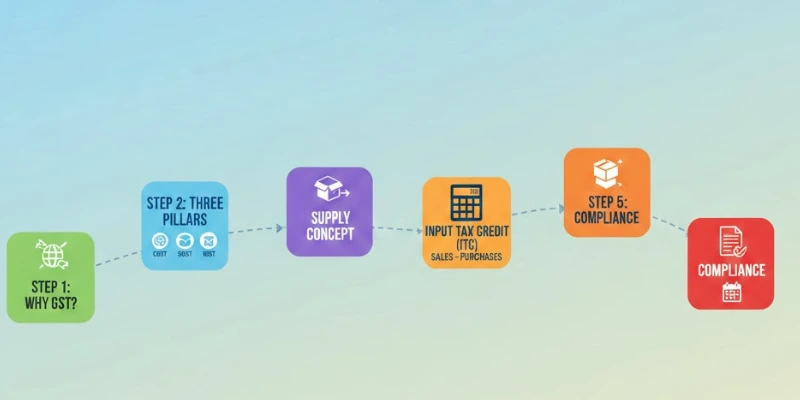
Learning GST feels confusing for many beginners because it mixes law, accounting, and daily business practice. People often know the term but don’t really understand how it works in real jobs. Whether you’re aiming for an accounting role, office admin work, or business operations, GST knowledge has become a practical career skill. Many learners start with GST Course in Trichy because structured learning helps connect concepts with real filings, invoices, and tax processes instead of just theory.
Understanding the basic idea of GST
GST is simply a tax system designed to replace multiple indirect taxes with one structure. The goal is to make tax collection smoother and more transparent for both businesses and the government. When you learn GST, the first step is understanding how goods and services move from seller to buyer and how tax gets added at each stage. This foundation matters because every advanced concept like returns, credits, and compliance depends on this basic flow.
Learning how registration and business identity work
Registration is the starting point for any business under GST. This is where concepts like GSTIN, legal business names, and categories of registration come in. Step-by-step learning here helps you see how a business becomes part of the GST system. Once you understand registration, the rest of GST feels more logical. It stops being just rules and forms and starts looking like a system that tracks business activity clearly.
Making sense of invoices and tax structure
GST invoices are not just bills; they are legal documents. Learning how invoices are structured teaches you about CGST, SGST, and IGST without making it feel technical. You begin to see why tax values are split and how transactions between states differ from local sales. This step is important because most real-world GST work revolves around invoice checking, validation, and record maintenance.
Connecting GST with accounting skills
GST does not work alone. It connects closely with accounting systems, bookkeeping, and financial records. People who already understand accounting concepts find GST easier to learn. This is why learners often pair tax knowledge with tools and skills gained through paths like Tally Course in Trichy, where financial entries, ledgers, and reports build a strong base. When accounting and GST connect, compliance work becomes practical instead of confusing.
Understanding returns and compliance flow
GST returns are where theory turns into daily work. Learning returns step by step means understanding what data goes in, where it comes from, and how it is matched. This stage teaches responsibility and accuracy. Even small errors affect filings. This is also where students start thinking like professionals because GST becomes less about exams and more about real responsibility in a company environment.
Seeing how GST builds job readiness
GST knowledge is not limited to accounting roles. Operations teams, business analysts, office admins, and finance assistants all use GST data. When learners explore job markets, they notice that practical exposure matters more than memorized definitions. In growing business regions, people often look for structured learning options like GST Training in Erode because local demand for tax-compliant staff keeps increasing across small firms and large companies.
Building confidence through practice
The final step is practice. Reading concepts helps, but confidence comes from doing. Working on sample invoices, returns, and business cases changes how GST feels. It stops being a subject and becomes a skill. At this stage, learners start thinking in terms of workflow, responsibility, and accuracy. This mindset is what interviewers notice when they test GST understanding in real job discussions.
Learning GST step by step changes how you see finance roles. It builds clarity, discipline, and confidence. When combined with accounting and compliance knowledge, it prepares you for stable career paths in business and finance operations. Many learners align their future planning with structured financial skills and digital tools, often connecting GST learning with broader growth paths like Tally Course in Erode, where long-term career readiness becomes more practical than just certification knowledge.
Also Check: What are the Essential Steps for Beginners to Master Tally?